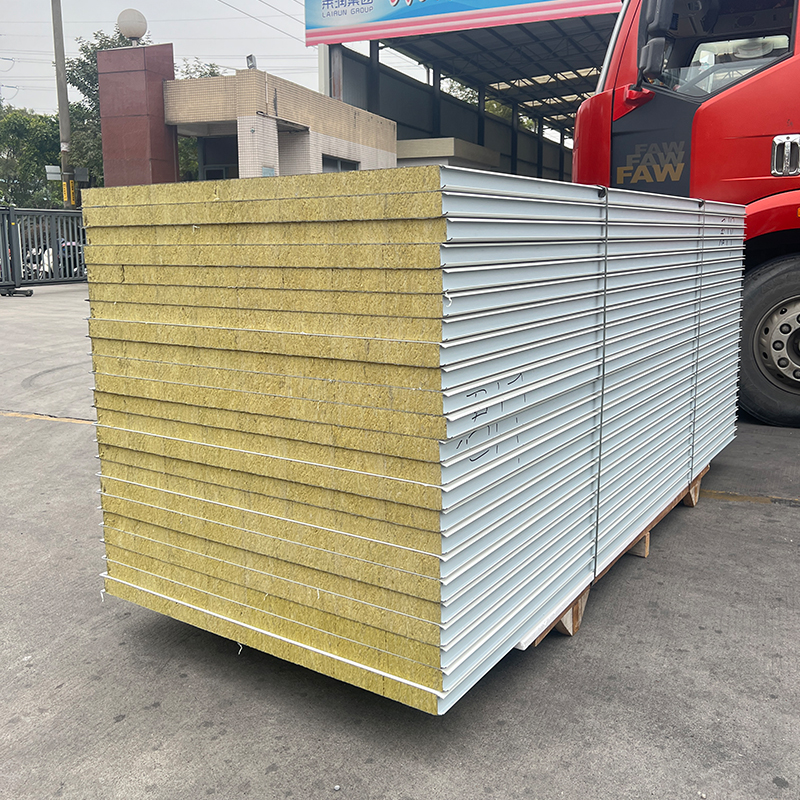
Rock Wool Sandwich Panel
Rock wool sandwich panel detail: handmade Type 50 and machine-made 1150 type rockwool panels, with catalogue thickness, density, structure and joint facts.
- Handmade rockwool panel, Type 50: conventional width 300–1,180 mm; thickness 50 mm, customisable to 75 / 100 mm; rockwool density 60–120 kg/m³ (company catalogue).
- Machine-made rockwool panel, Type 50, 1150 type: conventional width 1,150 mm; thickness 50–150 mm; rockwool density 60–120 kg/m³ (company catalogue).
- Machine-made rockwool: the catalogue describes it as A1 grade fireproof rockwool. This page does not state a fire-resistance time.
- Rockwool core: basalt and other natural minerals melted at high temperature and formed into fibres (company catalogue, machine-made panel description).
What this panel is
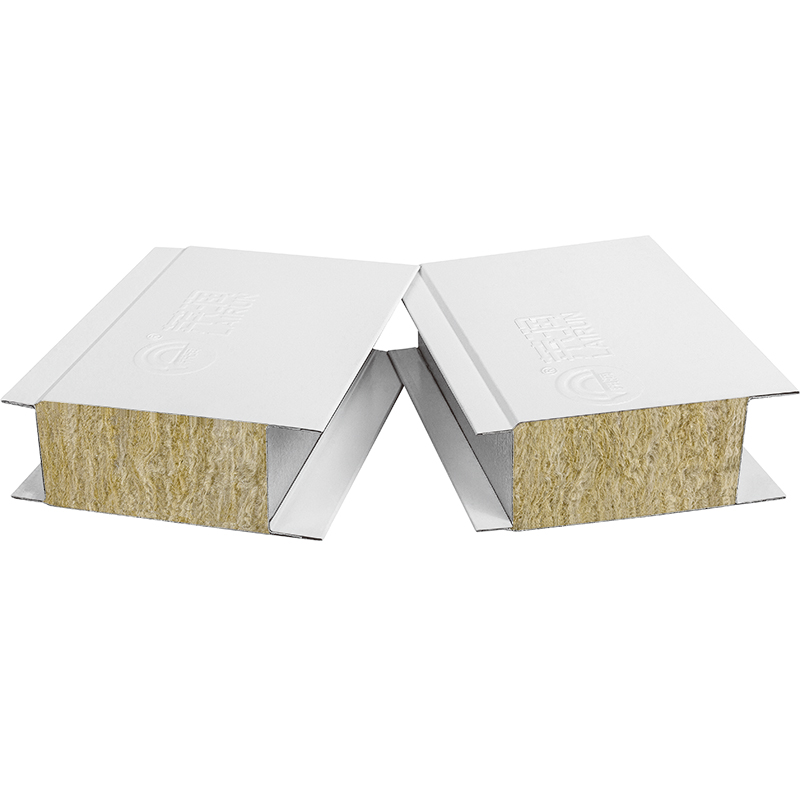
A rock wool sandwich panel is a cleanroom panel built from metal facings with a rockwool core between them. On this site the panel is offered through two distinct manufacturing routes, and the route determines the thickness set, the width convention and the joint system. The handmade route is a Type 50 panel built with a galvanised keel frame, edge wrapping and corner fittings, and it is described in the company materials as having better load-bearing behaviour than a standard machine-made panel, together with flexibility for pre-formed conduit routes and pre-cut openings. The machine-made route is a tongue-and-groove panel produced by continuous automated roll pressing, with a coloured or stainless facing, a rockwool core and a high-strength adhesive, and it is described as fast to install because of its tongue-and-groove joint.
Both routes are intended for the same building elements: interior partition walls and ceilings in cleanrooms. The company materials list hospitals, pharmaceutical plants, electronics plants, biological research laboratories, food plants and beverage plants as the cleanroom settings for handmade panels generally, and they describe machine-made panels generally for cleanroom walls and ceilings. This detail page does not extend either route to roof or exterior cladding use, and it does not present a rockwool panel as a standalone loose insulation board. A separate guide compares a loose rockwool insulation board with a sandwich panel, and that guide does not create a loose-board product.
Handmade rockwool panel: structure and specification
In the handmade rockwool panel, rockwool fibres stand perpendicular to the metal panel, and high-density rockwool strips are arranged in a staggered pattern along the length of the panel. The company materials link that staggered fibre structure to better load-bearing behaviour and to a clear reduction in noise transmission, and they describe the panel as suitable for spaces with high sound insulation requirements. That is a structural description, not a measured sound rating: this page gives no decibel figure, because the company materials used for this site give no decibel figure for this panel.
| Parameter | Handmade rockwool panel, Type 50 (company catalogue) | Note |
|---|---|---|
| Conventional width | 300–1,180 mm | Length is set by project. |
| Thickness | 50 mm; customisable to 75 / 100 mm | Do not assume intermediate thicknesses without an inquiry check. |
| Rockwool density | 60–120 kg/m³ | Set to customer requirements; no density-to-performance conversion is given here. |
| Joint | Male-female joint, or centre-aluminium joint | See the joint installation page for the company wording. |
| Environment wording | Catalogue wording for this handmade panel covers low-temperature, low-humidity, high-temperature and high-humidity environments | Quoted by panel type only; do not transfer this wording to other panel types. |
Handmade panels also support pre-formed conduit routes and pre-cut openings, which reduces cutting on site. When a wall schedule includes pipe penetrations, cable routes or equipment openings, list them with the handmade inquiry so the panel layout can be checked before production, rather than cutting panels after delivery.
Machine-made rockwool panel: structure and specification
The machine-made rockwool tongue-and-groove panel uses a coloured or stainless metal facing, a rockwool core and a high-strength adhesive, formed by continuous automated roll pressing. Rockwool in this description is made from basalt and other natural minerals melted at high temperature and formed into fibres, and it is described as a non-combustible, heat-insulating and sound-insulating material. The catalogue describes this machine-made panel as A1 grade fireproof rockwool. That attribution is kept with the claim on every page of this site: the A1 wording is a catalogue description of the machine-made panel, not a test report reproduced here, and no fire-resistance duration is attached to it.
| Parameter | Machine-made rockwool panel, Type 50, 1150 type (company catalogue) | Note |
|---|---|---|
| Conventional width | 1,150 mm | The 1150 type designation refers to this width system. |
| Thickness | 50–150 mm | A range, not a single fixed thickness; confirm the thickness for each wall or ceiling area. |
| Rockwool density | 60–120 kg/m³ | Set to customer requirements. |
| Joint | Tongue-and-groove joint | Continuous joint system for wall and ceiling runs. |
| Stated benefits | Fire protection, weather resistance, sound insulation, heat insulation, convenient installation (company catalogue) | Benefit words only; no numeric performance values are added here. |
How to read the two thickness sets
The handmade set is a base thickness with two custom options: 50 mm as the conventional thickness, with 75 mm and 100 mm as custom options. The machine-made set is a continuous range from 50 mm to 150 mm. A buyer who writes only “rockwool panel” on an inquiry has not specified a panel, because the same nominal thickness can belong to either route with a different joint and a different width convention. The inquiry should therefore name the route first, then the thickness, then the density, then the joint. The selection guide on this site walks through that order step by step.
Where this panel is used, and where it is not presented
Supported uses on this site are cleanroom interior walls and ceilings: partition walls that divide clean production, laboratory or food preparation areas, and ceilings that close those areas from above. The handmade panel's general cleanroom settings, as listed in the company materials, include hospitals, pharmaceutical plants, electronics plants, biological research laboratories, food plants and beverage plants. That list describes settings for handmade panels generally; it is not a claim that a rockwool panel alone satisfies a hospital or pharmaceutical regulatory requirement, and no regulatory claim is made on this page. Uses not presented here include roof panels, exterior cladding, standalone acoustic studio panels and loose insulation boards. Each of those would need its own product evidence, and this site does not invent it.
Colour, facing and finish: what to confirm
Panel colours are customisable to an international colour card, and the company materials list conventional colours for panels generally. Facing options for machine-made panels generally include galvanised steel, stainless steel and aluminium alloy options in the company description of machine-made panels. Because facing and colour availability can vary by panel type, this page does not fix a single facing or colour list for rockwool panels. Send the facing and colour required with the inquiry and ask for confirmation for the exact route and thickness chosen.
Before ordering: confirm these items
- Panel route: handmade Type 50 or machine-made 1150 type.
- Thickness for each wall area and each ceiling area, separately.
- Rockwool density required, within the 60–120 kg/m³ catalogue range.
- Joint type: male-female, centre-aluminium, or tongue-and-groove, matching the route.
- Width and length requirements, including any pre-formed openings or conduit routes for handmade panels.
- Panel colour and facing for the route chosen.
- Before ordering, confirm the minimum order quantity and the lead time in your inquiry.
- Before payment, confirm the panel variant, thickness, density and joint type in writing.
Certificates are available upon request. No certificate number or issuing body is stated on this site.