Machine-Made Rockwool Panel, 1150 Type
Machine-made rockwool panel 1150 type detail: tongue-and-groove joint, 50-150 mm thickness, density 60-120 kg/m3, catalogue A1 grade fire wording.
- Type: machine-made rockwool tongue-and-groove panel, Type 50, 1150 type (company catalogue).
- Conventional width: 1,150 mm; thickness 50–150 mm (company catalogue).
- Rockwool density: 60–120 kg/m³, set to customer requirements (company catalogue).
- Fire wording: the catalogue describes this panel as A1 grade fireproof rockwool. No fire-resistance time is stated.
- Core: rockwool made from basalt and other natural minerals melted at high temperature and formed into fibres (company catalogue).
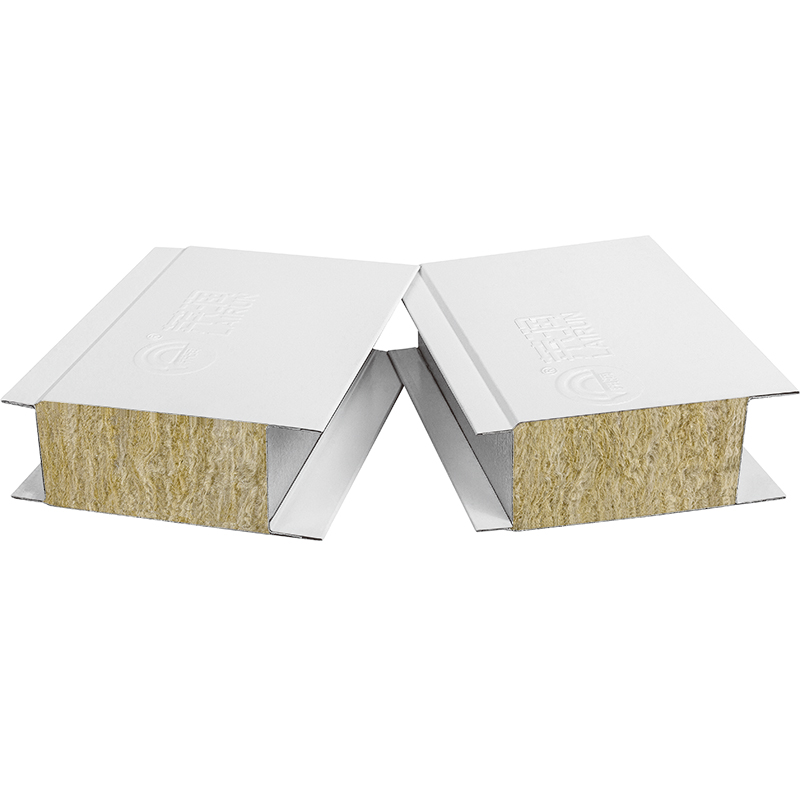
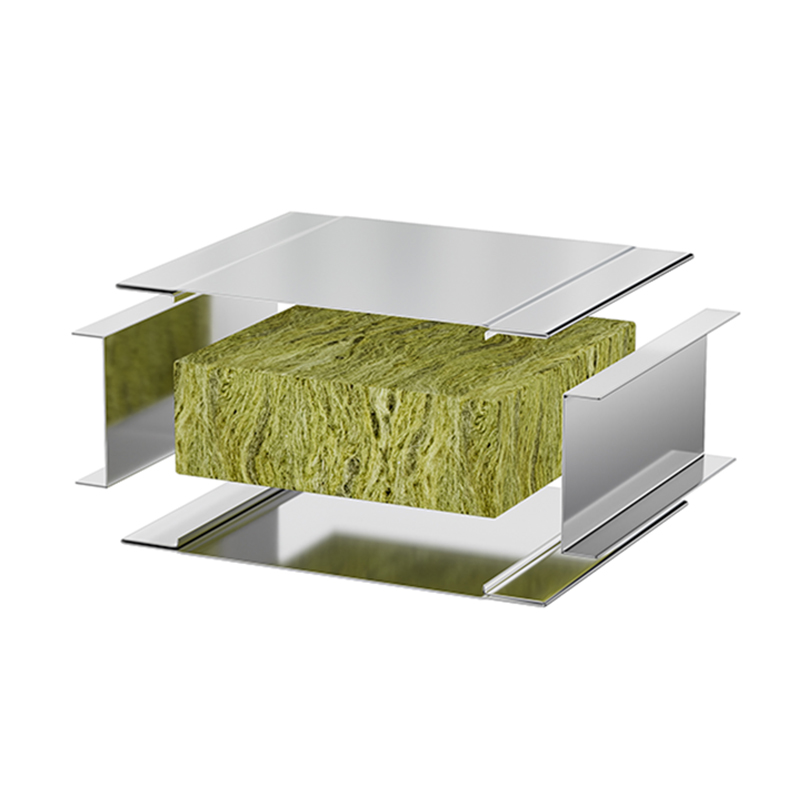
What the machine-made rockwool panel is
The machine-made rockwool panel is a tongue-and-groove cleanroom panel produced by continuous automated roll pressing. A coloured or stainless metal facing, a rockwool core and a high-strength adhesive are formed together in a continuous process, which is why the company materials describe machine-made panels generally as fast to install: the tongue-and-groove joint lets each panel lock to the next in a straight wall or ceiling run without the separate frame assembly used for handmade panels. The company materials also note, as a general route comparison, that machine-made installation can be faster than traditional panel installation; that comparison is a general marketing description in the company materials, and this page does not convert it into a time saving for a specific project.
The core material is rockwool, described in the company catalogue as made from basalt and other natural minerals melted at high temperature and formed into fibres. In that description, rockwool is a non-combustible, heat-insulating and sound-insulating material. Those three adjectives describe the core material in the catalogue's own terms. They are not test results reproduced here, and this page does not attach a thermal conductivity value, a density-to-performance table or a sound rating to them, because the company materials used for this site give none of those values for this panel.
Specification, from the company catalogue
| Parameter | Value (company catalogue) | How to use it in an inquiry |
|---|---|---|
| Panel type | Machine-made rockwool tongue-and-groove panel, Type 50, 1150 type | Name the type and the 1150 designation together. |
| Conventional width | 1,150 mm | The 1150 type system is built around this width. |
| Thickness | 50–150 mm | State one thickness per wall or ceiling area within this range. |
| Rockwool density | 60–120 kg/m³ | Set to customer requirements; no conversion to a performance figure is given here. |
| Joint | Tongue-and-groove joint | The joint system for this route; see the joint installation page. |
| Length | Set by project | Give the length for each run in the schedule. |
| Catalogue benefits | Fire protection, weather resistance, sound insulation, heat insulation, convenient installation | Benefit words only; no numeric values are added here. |
Fire wording for this panel
The catalogue describes this machine-made rockwool panel as A1 grade fireproof rockwool. That sentence is the fire claim for this panel on this site, and it is always kept with its catalogue attribution. No fire-resistance time in minutes is attached to it, no test standard number is attached to it, and no finished wall-system rating is derived from it on this site. The reason for that restraint is practical as well as evidential: a finished wall's fire behaviour depends on the panel, the joint, the fixing and the surrounding construction, not on the core description alone. A buyer who needs fire documentation for a project should name the exact variant and ask what documentation can be supplied for it, and should confirm it before ordering.
The A1 wording is not transferred to other panels on this site. In particular, it is not used as the fire description for the handmade rockwool panel, which is described through its fibre structure and sound behaviour, and it is not used for panels with other core materials. Each panel type keeps its own fire wording, and the fire protection applications page explains how to ask for a variant-specific check.
Sound, heat and weather benefits, in catalogue words
Sound insulation, heat insulation and weather resistance are listed in the catalogue as benefits of this panel, together with fire protection and convenient installation. Those benefit words are useful for a first selection: they tell a buyer that this panel is positioned for rooms where fire, sound and heat insulation all matter, rather than for a single-purpose panel. They do not tell a buyer how much sound or heat insulation a particular thickness gives, and this page does not invent those numbers. When a room brief is driven mainly by sound or by heat, the inquiry should describe the room and the adjoining conditions, name the thickness under consideration, and ask what information can be supplied for that exact variant.
Where this panel is used
Machine-made panels generally are described in the company materials for cleanroom walls and ceilings. For this rockwool panel, the supported uses on this site are cleanroom interior partition walls and ceilings, in the same settings as handmade panels generally, including production, laboratory and food areas where a jointed wall and ceiling system is required. The panel is not presented here as a roof panel, exterior cladding panel or loose insulation board. A project that needs an exterior or roof element should not assume this interior panel covers it.
Setting out a tongue-and-groove run
A tongue-and-groove run is set out panel by panel in a straight line, with each panel's tongue entering the next panel's groove. That system suits long straight walls and ceilings, and it gives a consistent joint line along the run. Corners, door openings and ceiling junctions need separate setting-out attention, and the joint installation page explains the tongue-and-groove joint in the company materials' own wording without adding fixing dimensions that the company materials do not state. When a schedule includes many corners, openings or short returns, list them with the inquiry so the joint layout can be checked before production.
Machine-made versus handmade, in one paragraph
Choose the machine-made panel when the priority is a uniform tongue-and-groove run in the 1,150 mm system, with thicknesses anywhere in the 50–150 mm range. Choose the handmade panel when the run needs pre-formed openings or conduit routes, a width outside the 1,150 mm convention, or the staggered fibre structure's load-bearing behaviour. The full comparison page sets the two routes side by side by thickness set, joint and width, so the choice can be checked against a real wall schedule rather than a general preference.
Before ordering: confirm these items
- Panel type: machine-made rockwool panel, 1150 type.
- Thickness per area within the 50–150 mm range, confirmed for that area.
- Density within the 60–120 kg/m³ catalogue range.
- Joint: tongue-and-groove, as specified for this route.
- Width system: 1,150 mm convention, with lengths per run.
- Corners, openings and ceiling junctions listed with the schedule.
- Panel colour and facing for this panel type.
- Before ordering, confirm the minimum order quantity and the lead time in your inquiry.
- Before payment, confirm the panel variant, thickness, density and joint type in writing.
- Before payment, confirm the fire documentation required for the exact variant, if fire protection is part of the brief.
Certificates are available upon request. No certificate number or issuing body is stated on this site.